Towns & Villages in Monaco — 13 of Our Favourites

Discover the top Monaco towns and villages

Explore some of the loveliest towns and villages around Monaco.

Find loads of top tips and local insights in our Monaco Destinations Guide.

a church in nice

1. Beaulieu-sur-Mer

Beaulieu-sur-Mer is filled with Belle Époque buildings, cafés and restaurants.

One of the many beautiful towns dotted along the Riviera sea front between Nice and Monaco, it's easy to get to by train or bus, both of which run regularly up and down the coast. It's a quiet, sophisticated kind of a place that has attracted many celebrities over the years looking for a tranquil haven in which to soak up the sun without getting hassled. The seafront, beaches and ports are its main points of interest, but there is also a good market that takes place in the town centre every day where you can browse fresh local produce, as well as the occasional bric-a-brac market.

Sandwiched between Nice and Monaco it attracts a wealthy crowd and its two marinas make it very popular with the yachting set. There are around 800 boats permanently moored here, meaning that there is plenty going on around the two ports.

Backed by sheer cliffs, you can also drive or hike high above the town and enjoy magnificent sea views.

Rocher de Monaco (Rock of Monaco), Monte-Carlo

2. Rocher de Monaco (Rock of Monaco)

Location
Monaco

The Rock of Monaco is a 62 metre tall promontory overlooking Monte-Carlo's port and the Mediterranean sea. It is also the oldest of Monaco's areas, where the Old Town is located.

The Rock of Monaco served as a shelter for the area's early humans from the end of the Paleolithic period, approximately 400,000 BC, evidence of which has been found in a cave in St. Judist's Gardens. The area's first permanent settlers were the mountain-dwelling Ligures, who emigrated from their native city of Genoa, Italy.

During the 6th century BC, Greeks founded the colony of Monoikos. Its name comes from Hercules, who was said to have constructed the ancient path that passed through the region from Spain to Italy together with Monaco's port and a coastal road. The road was, thus, dotted with altars to Hercules, and a temple dedicated to him was established on the Rock of Monaco.

The Rock of Monaco was the first conquest of the Grimaldi dynasty, the rulers of the country for more than 700 years, founded when the Guelf Francesco Grimaldi disguised himself as a Franciscan monk in order to gain entry to the city and open the gates for his soldiers in 1297.

Nowadays, the rock is home to Monaco's Old Town, with medieval narrow streets and the country's most important monuments: the Palais Princier, Saint Nicholas Cathedral and the Oceanographic Museum.

a village in Nice on a hilltop

3. Gorbio, Alpes-Maritimes

Location
Monaco

On arriving in Gorbio you’ll find yourself in the Place de la Republic - a traditional village square complete with historic fountain, 300 year old elm tree and two restaurants. 

Unlike some of the area’s medieval villages, Gorbio still has a very lived-in feel to it; there aren’t so many ex-pats or holiday-makers here and there are plenty of locals who have lived here for generations. The village square is a real focal point with children playing football round the fountain, elderly folk chatting under the ancient tree and neighbours stopping for a chat and a pastis at the café.

It's certainly a bit less “polished” than some of the other villages but this adds to its charm - some of the streets are a bit ramshackle and some of the houses look like they’ve been deemed 'beyond repair' and left to the elements. However, the village is still extremely pretty and has plenty of character.

Gorbio is an excellent starting point for exploring the Alpes-Maritimes, just take a quick stroll around the village and see how many hiking signposts there are. From here you can start the GR51 that runs all the way up to Lake Geneva in the northern Alps.

a hilltop top with green fields around it

4. Sainte Agnes, Alpes-Maritimes

Location
Monaco

At 800m above sea level, the utterly beautiful mountain village of Sainte-Agnes is the highest coastal village in Europe. Roosting on the hillside high above Menton by the Italian border, this village offers breathtaking views across the Italian and French Rivieras.

Listed as one of the most beautiful villages in all of France, Sainte-Agnes is a place of cool stone alcoves and vaulted chambers, pretty terrace cafés and artisan workshops and boutiques tucked away on cobbled lanes.

Presided over by the ruins of a 10th century chateau-fort, the village's strategic value was again noted during WWII when Fort Maginot was built to defend France against attack from across the Italian border.

The village itself is charming, full of stone alcoves and vaulted chambers - little craft workshops and artisan boutiques are tucked away on cobbled back streets and delicious smells from the restaurants waft through the air.

a pretty town with red roof tops and a medieval tower

5. La Turbie, Alpes-Maritimes

Location
Monaco

La Turbie lies in the hills above Monaco and is a thriving medieval village with buildings dating back to Roman times.

The old part of the village is a beautiful network of arches, passageways and stone buildings that are immaculately kept. At the pinnacle is the Trophée des Alpes, which you can see from a distance or pay a small entry fee to access the monument and its gardens. The Baroque church of Saint-Michel was built in 1764 and has a fine collection of paintings, as well as a fabulous altar made from 17 types of marble.

Surrounding the medieval village is a pleasant residential area with a number of good brasseries that look out onto a central square - it’s a popular spot with locals as well as sightseers, making it feel not quite so “touristy”as some places. Continue past the square and turn right to find the Rondo, a panoramic viewpoint that looks out over the port of Monaco.

red roof tops near the sea

6. Menton

Location
Menton

Warm ochre buildings, jumbled terracotta roofs, pink blossom trees and azure blue sea make Menton a picture-perfect town, the last one right before the Italian border.

With the sea on one side and the foothills of the Alps behind, it is claimed that you can ski in the mountains in the morning before sunbathing on the beach in the afternoon at certain times of year.

The old town is a labyrinth of charming alleyways, bell towers and churches, winding up towards the cemetery at the peak of the hill. Stroll up there for a fascinating glimpse into the town’s past and unrivalled views of the coastline.

Menton has the best of both worlds; the historic old town and all the hustle and bustle of a modern town. The main pedestrianised street is filled with shops, cafés and restaurants and the main road that runs along the seafront offers lots of places to eat and drink, as well as a large casino and nightclub. It has a strong Italian influence, which can be seen (and tasted) in the restaurants and food markets.

a busy port in Monaco

7. La Condamine

Location
Monaco

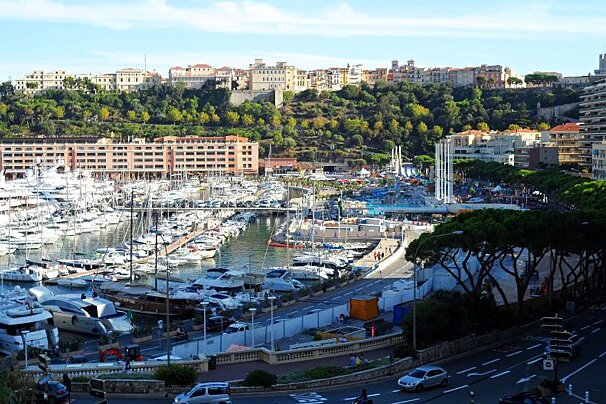
La Condamine lies to the south-west of the principality covering the area of Port Hercule that is filled with luxury yachts, and is also the home of Monaco's business district.

The first impression you get on arriving at the port is that it’s a bit like Blackpool but with sunshine. The promenade is a long noisy strip of fairground rides, bouncy castles, go-karts, ice cream stalls and everything that the big kid in you could wish for. There’s also an open-air swimming pool with twisty water slides, what more could you want?

The Princess Caroline district is a smart pedestrianised area set back from the port with lots of good shops and plenty of places to eat and drink. It's distinctly upmarket, but has a relaxed friendly vibe and is a nice place to browse for a couple of hours.

the port and surrounding buildings in Cap d'Ail

8. Cap d'Ail

Location
Monaco

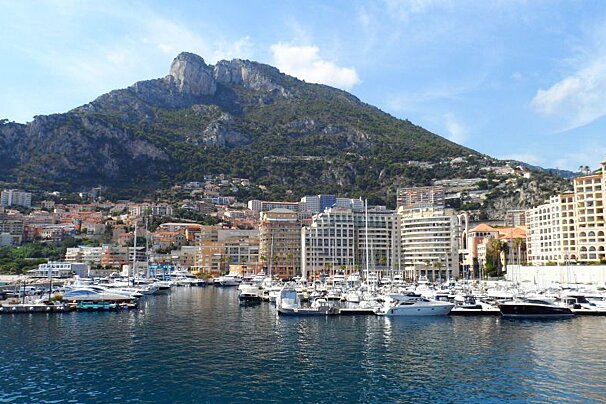
A friendly seaside resort with a splash of old-school glamour, Cap d'Ail has several beaches ranging from fine sandy beaches with elegant restaurants, to remote and rocky coves.

Cap d'Ail is the last town on the French Riviera before you cross the border into Monaco, and there is definitely an overflow of wealth and style. Easily accessible by bus or train from Nice, you can while away the days on the beach or take a day trip to Monte-Carlo. The two towns are separated by a port that hosts a number of festivals and regattas during the summer where you can see some seriously swanky yachts.

There are a number of public parks and gardens, our favourite being Parc Sacha Guitry for its impressive views of the sea. Various guided tours are available through the town and along the seafront - enquire at the tourist office for details and prices.

a reflection of the hotel de paris in the fountain

9. Monte-Carlo

Location
Monaco

Monte-Carlo is where the world’s richest people come to fritter lavish amounts of money - just look at the cars parked in Place du Casino to get an idea of the clientele.

Monte-Carlo is a district of the Principality of Monaco; high profile residents include Shirley Bassey, Bono, Mohammed Al Fayed, Mick Hucknall, and many other famous celebrities. It would come as no shock that it's also home to its fair share of F1 drivers and tennis players such as Jensen Button, Lewis Hamilton, Nico Rosberg, David Coulthard, Novak Djokavic, Daniil Medvedev, and Stefanos Tsitsipas amongst many more.

Place du Casino is at the heart of Monte-Carlo and is dominated by the Salle Garnier which houses the casino and the opera. Adjacent to the casino entrance is the Café de Paris on one side and the luxurious Hotel du Paris on the other.

If you win big at the casino you won’t have any shortage of places to spend your money; Monte-Carlo has practically every big-name designer store within minutes of each other - Chanel, Hermes, Balenciaga, etc - and they are all handily listed on the street signs, so that you can find exactly what you're looking for. There is also the Le Metropole shopping centre nearby which houses luxury brands such as Kenzo, Hugo Boss and Swarovski.

Monte-Carlo is easily accessible, being right on the Nice-Ventimiglia train line. If you prefer to fly in, you’ll be pleased to know that Monaco has its own heliport.

looking up at a hill top view

10. Eze

Location
Eze

A wonderful medieval village, Eze is perched on a hilltop overlooking the Riviera with a ruined 12th century castle at its pinnacle. It's actually split into two very distinct areas - Eze-Sur-Mer and Eze Village.

Eze is easily the most dramatic of the medieval hilltop towns. Perched a dizzying 1,400 feet above the Mediterranean between Cap d'Ail and Cap Ferrat, Eze looks precariously balanced on its rocky eagle's nest.

Eze Village is the higher part, whereas Eze-Sur-Mer is down on the coast. If you want to head to the beach then you can take a direct train from Nice to Eze-Sur-Mer; to get to Eze Village you can either get a bus from Nice, take one of the (infrequent) bus No. 83 services from Eze sur Mer, or hike up (about one strenuous hour) from the train station.

Streets are narrow and cobbled, purple bougainvillea cascades from turrets and towers, old bells and metal signs hang above heavy wooden doors and every now and then you get a glimpse of bright blue sea in between the rough stone walls. Walt Disney was a regular visitor to Eze Village and when you see the fairytale architecture you’ll understand where his inspiration came from.

a small town by the sea in Nice

11. Saint-Jean-Cap-Ferrat

Location
Cap Ferrat

Sitting on a beautiful rocky peninsula of pine trees and palms just to the east of Nice is Saint-Jean-Cap-Ferrat. This area is the epitome of elegance and old Riviera glamour: from the small, chic harbour to the palatial gated villas and magnificent gardens of celebrities, oligarchs and famous family dynasties.

The village itself is quite small and the shopping district is pretty much just one petite, but lovely, street. Drop down to the port area though and you’ll find more shops and boutiques, restaurants, cafés and a small market place, while the beaches offer cool beach clubs.

Sospel

12. Sospel

Sospel is a more of a mountain town than a quaint little village; as well as having its fair share of crooked back streets and ancient buildings, it also has quite a large population of residents and attracts lots of hikers and bikers, so it doesn't rely entirely on coachloads of sightseers to get by.

On leaving the train station it's a short walk cut through a charming little park to get to the Place des Platanes; a large square with benches, shaded promenades, flowerbeds and a boules club. There is a large market here every Thursday morning and you can still see some 15th century columns dotted about – they are all that remains of the old church of Saint Pierre.

Once you arrive at the River Bévéra look left for a wonderful view of the colourful houses with their trompe l'œil façades on the opposite bank and the old bridge with its fortified gate house. Le Pont Vieux was built as a toll bridge for travellers in the 12th century and was damaged in the Second World War, then rebuilt using the original stones.

Sospel has lots of faded charm in its chipped stones and peeling paintwork; the dark alleyways and hidden courtyards are cool even in the height of summer and far less frenetic than some of the more touristy villages.

a sea harbour at a town on the coast of Nice

13. Roquebrune Cap Martin

Location
Monaco

Roquebrune-Cap-Martin lies between Monaco and Menton, and like so many towns on this dizzyingly steep section of the Riviera, has distinct parts - in this case, three.

Perched high above the coast, you'll find the medieval village of Roquebrune, a very pretty and extremely atmospheric 10th century village with spectacular views.

A maze of narrow alleyways for exploring, with pretty squares and charming statues randomly distributed amongst the streets. Below is the forested headland of Cap Martin, where grand Belle Epoque villas sit beneath the cool pines. Down on the beach you'll find the resort town of Roquebrune-Cap-Martin, where most of the accommodation and new apartment blocks sit in front of a stony beach.

The modern town of Cap Martin is as lively and bustling as any along the Riviera with bars, restaurants and ice cream stalls lining the seafront.

Most of the beach is free access and they have a designated “Handiplage” section where those with disabilities can access the water safely and with assistance.